

The Beautiful Ones: The Evolution of the NBA Villains
Kevin Garnett embodied the natural intensity of the NBA villain, but today’s players craft their own antagonistic personas. Still, the role of the villain remains essential to the game’s drama.

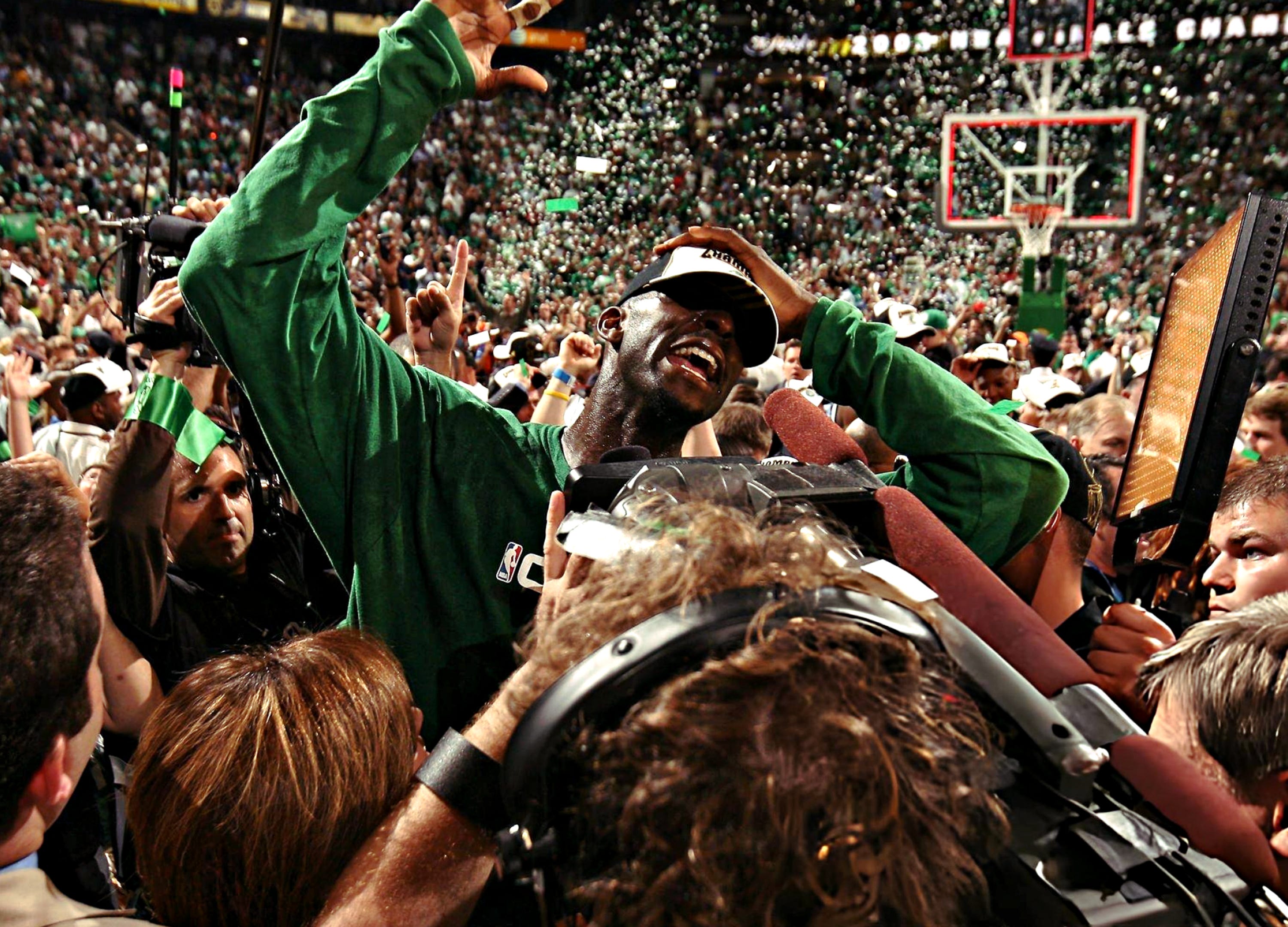
On June 17, 2008, the air inside the TD Banknorth Garden felt different. Electricity seemed to vibrate through the skin of those present, while green confetti rained down from above, blurring the view and making it feel like a triumph of the Celtics’ colors. It was the end of a battle between two NBA titans, the Los Angeles Lakers vs. the Boston Celtics, two legendary teams that represented the rich history of the league and embodied one of the most legendary rivalries in sports. That day, after Game 6 of the 2008 NBA Finals, the Celtics had clinched their 17th championship, the first after a twenty-two-year drought filled with unfortunate events. Only two years before, in 2006, the franchise had suffered a devastating blow with the death of its greatest leading figure, Red Auerbach. Grief loomed on the Celtics and was also reflected in the team’s performance: a terrible 24-58 record which inevitably placed them last in the Eastern Conference. In a game of historical coincidences, the 2007-2008 season also marked the first Celtics’ first NBA Finals appearance since 1987, when they had lost to the Los Angeles Lakers in six games. Both franchises were going through transitional periods. The Celtics, undergoing a major restructure, had fallen from the glory days of their past. Meanwhile, the Lakers found the right path through a combination of talent and experience, with a roster which included Kobe Bryant and Shaquille O’Neal, alongside an expert head coach in Phil Jackson. While the Lakers dominated in the early 2000s, the Celtics struggled to recapture the success of their previous franchise stars, including Larry Bird, Kevin McHale and Robert Parish. It wasn’t until 2007 that the Celtics’ fortunes began to turn, starting with the acquisition of Ray Allen from the Seattle SuperSonics and Kevin Garnett from the Minnesota Timberwolves, a decision that revitalized the team and reignited the “Big Three” atmosphere. This transformed roster, therefore, led the Celtics to an impressive 66-16 record, dominating the regular season and ultimately claiming the 2008 NBA Finals championship. That was the moment of redemption. That was the moment when it became clear how to distinguish good teams from great ones and when decisions and strategies are proven to be calculated and successful.
That was the moment Kevin Garnett stood there in the middle of a packed Garden, shoulder-to-shoulder with journalists, teammates and passionate fans. Interviewed by Michele Tafoya for ESPN, Garnett must have felt the same electricity in the air. Having played a key role in the revival of one of the league’s greatest teams, Garnett was finally watching the frustration of years spent with the Minnesota Timberwolves melt away. His hunger, anger and competitive nature had been channelled into something greater, not only to be the face of a franchise who could have never strived for success. For the first time, he could taste the sweetness of victory, his tears of joy and satisfaction replacing the frowns of disappointment that had marked his journey. As he stood beside Michele Tafoya, brushing past the crowd of people around him, Garnett struggled to explain his emotions. He muttered disconnected phrases, touched the 2008 NBA Champions hat as if he couldn’t believe what was happening around him, and finally, after a brief pause, he took a breath and it all began to sink in. “Anything is possible,” he said, as if making a profound statement. He pulled off the hat, threw his head back and screamed it once more, louder this time so that the whole arena could hear him: “Anything is possible!”
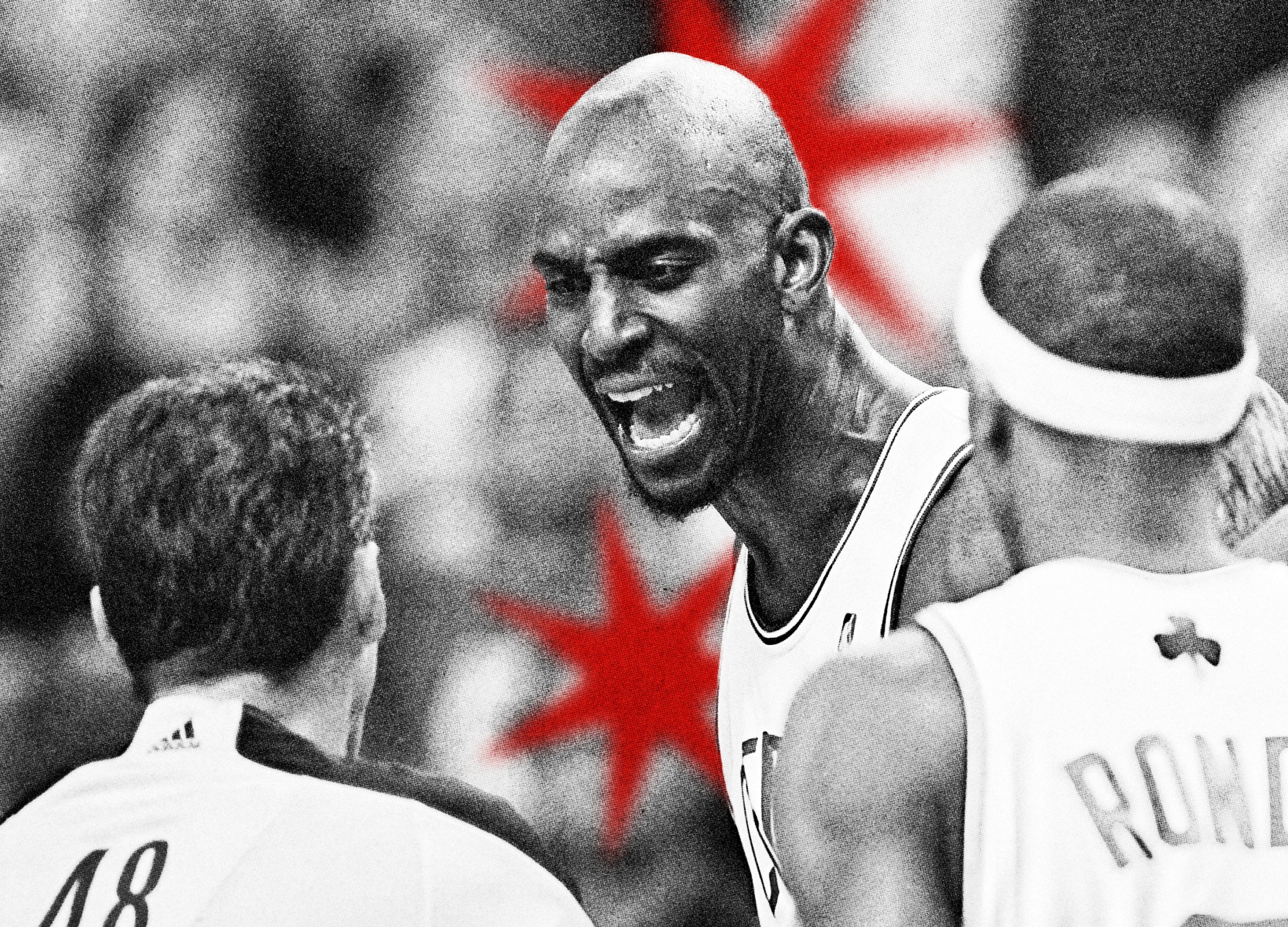
In a certain sense, this moment in Kevin Garnett’s career makes it almost easy to forget the role he had come to embody. He shouldn’t be seen as the hero, after all. He was the villain, and a really good one at that. The confetti raining down and the celebration of what seemed like the breaking of a curse blurred the lines between heroes and villains, forever changing the course of NBA history. What is a villain, if not a hero who didn’t win? After all, heroes and villains are often created from the same mold, and especially in the context of sports, they also share similar goals and struggles, but their paths to greatness are marked by vastly different approaches. As a result, they are marked with opposing labels, creating a distinction between the good guys and the bad boys. Kevin Garnett was definitely marked as a bad boy, perhaps the last of the true organic villains of the league. If unfamiliar with his style and larger-than-life persona, the primal scream in front of the cameras might have seemed like a simple reaction a monumental win. However, in a deeper, more emblematic sense, that was a declaration of the competitive fire, intensity and persistence that had always defined him. That was, in other words, the exact moment the villain became the hero and there were no more limits to the diversity of human nature, at least in sports.
What truly stands out about Kevin Garnett’s villainy, in fact, is the focus on his nature. He wasn’t born a villain, just like those before him. And, at the same time, his role in the league wasn’t a carefully crafted product of branding or strategy. It wasn’t intentional, but it emerged naturally from the same raw and unrelenting desire to win at all costs. This aspect actually made him more similar to figures like Michael Jordan and Kobe Bryant than to any other player. It’s an inner impulse that elite players feel which inevitably leads to a choice: do something about it, no matter the cost. The key difference between Garnett and other players, however, is that his role as a pure villain comes from his confrontations with those very same superstars: in fact, to be a hero, you need an antagonist, and the league found its perfect antagonist in Garnett’s nature. His rivalries, his trash talk, his fiery presence on the court were all elements which eventually were a natural extension of his playing style. Whether fans loved him or hated him – and sometimes those reactions occurred at the same time, creating an internal conflict for spectators – Garnett never limited himself and instead he embraced the competitiveness and the pursuit of victory. Therefore, as a walking paradox and conflicting character, Kevin Garnett reflected complex theories and ideals that have existed since the dawn of time.
It Used to Mean Something
They don’t make villains like they used to.
Starting in the 1980s, the concept of the villain in the NBA became a more nuanced and interesting topic. The 1970s, for instance, were mainly defined by intense physicality, frequent on-court brawls, a tough attitude and an aggressive playing style. However, this period was also a tough time for the NBA due to low TV ratings, drug problems and insufficient financial support. Given these challenges, the idea of having antagonists and heroes within the league seemed almost improbable. There were rivalries and some players were more violent or more dominant than others, but the figure of the true NBA villain didn’t really have a foundation in this context. It was just raw, unrefined and often chaotic basketball.
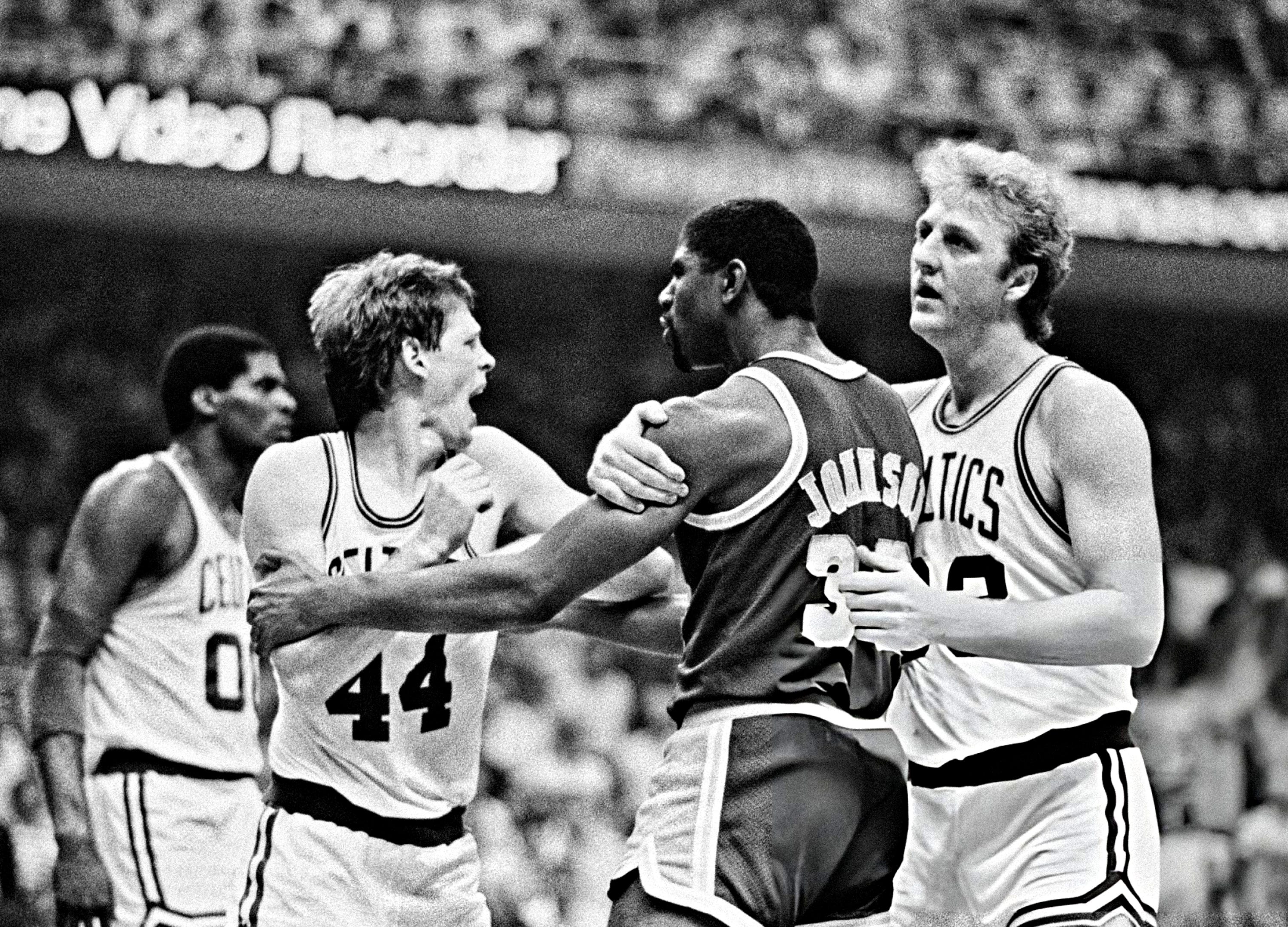
In the 1980s, however, a significant shift occurred. The arrival of a new generation of players, including future legends like Earvin ‘Magic’ Johnson of the Los Angeles Lakers and Larry Bird of the Boston Celtics, gradually transformed the NBA into a proper spectacle characterized by intense rivalries, larger-than-life personalities and, overall, an increasing interest in the game. It was during this time that heroes were born and, perhaps even more importantly, villains were identified. Some might even argue that Larry Bird and his Celtics teammates, in a certain way, could be considered the villains of the era. While they were highly respected for their skill and dominance, the Celtics of the 1980s were also known for being ruthless defenders, trash talkers and incredibly physical opponents. For visiting teams, especially the Los Angeles Lakers, playing away games at the Boston Garden meant stepping into a hostile environment: the crowd was passionate and the players often created a sense of animosity that made them public enemy number one. Additionally, the Celtics players were an amazingly tough team to beat and confronting them on their home court was about fighting against one of the most physically demanding teams in the history of the league.
However, the overall idea is that NBA villains weren’t created through an intentional strategy aimed at gaining attention or manipulating public perception. Although it was a great influential weapon, the media wasn’t the main force behind the creation of these villains, nor was there any official villain title directly handed out as if it was an honorary award. These players became villains organically, through the way they approached the game, by adding their own intensity, aggressiveness and psychological warfare. The rivalries also helped to solidify these roles, as identifying a hero often meant, simultaneously, creating antagonist in contrast. In certain cases, such as the Lakers/Celtics and Magic/Bird rivalries, the roles of hero and villain were often interchangeable, depending on cities and personal perspective. Fans in Boston might view Larry Bird and the Celtics as heroes, while in Los Angeles, they were the villains, and vice versa for the Lakers. Ultimately, the concept of the villain in the NBA revolves around someone who is both loved and hated for their unique approach to the game and the atmosphere they create, having a powerful impact on their teams, opponents and fans.
The Classic Era of NBA Villains
The late 1980s and early 1990s saw the appearance of some of the greatest villains in the history of the NBA, players who embodied a level of competitiveness and ferocity that naturally sparked divisive reactions. Figures like Bill Laimbeer, Dennis Rodman and Reggie Miller inevitably left a lasting mark on the league with their intensity and talent, but the way they presented themselves on the court and actively challenged the traditional aspects of the game rubbed many fans and opponents the wrong way. You either loved them or hated them, there was no middle ground. However, what truly set them apart was the fact that they were made to be noticed: both on and off the court it was inevitable to notice traits of their personalities, their desire to be competitive, and, an even more defining aspect, the either temporary or lasting rivalries they sparked which fueled their personas and contributed to their figures.
Therefore, to better understand the origins of this particular status, one must look at Chuck Daly’s Detroit Pistons, the team that terrorized the period of time between the late 1980s and early 1990s and earned the infamous title of the Bad Boys. This was a roster that many players and fans considered as unethical on multiple levels: they played mind games, basing their playing style on a combination of ruthless physicality and desire to win at any cost. The Pistons became the blueprint for a new type of villainy in basketball, one that was focusing on success, even if it meant bending or breaking the rules. Their approach made them highly disliked, but also extremely effective as their roster was stacked with talent and strategic thinkers, besides players who were as physical as they were hardworking. Eventually, they went on to win two NBA championships in 1989 and 1990.
These were also the years when the league saw the rise of some of the greatest teams and players in history. For instance, by 1984, Michael Jordan had joined the Chicago Bulls, and it was only a matter of time before his team would become one of the most successful and dominant forces of the league. However, Jordan himself wasn’t universally adored, both on and off the court. Like other players, he was more focused on winning than making friends or playing too nice. This basic contras between players like the Pistons and more traditional and focused players like Michael Jordan deepened the distinction between villains and heroes in the NBA. Therefore, even with his often unpleasant attitude, Jordan thrived in this environment, where talent and strategy were two fundamental factors. As the Bulls rose, the Pistons and the New York Knicks of the early 1990s eventually had to confront Jordan and his increasingly unstoppable team in order to fight for the titles. The Pistons, in particular, developed the infamous “Jordan Rules,” a series of calculated, punishing defensive schemes aimed at wearing him down physically and mentally. Many players back then, including Jordan himself, tried to challenge the aggressive playing style of the Detroit Pistons, and this only reinforced the perception of the Pistons as the Bad Boys and quintessential villains of the NBA.
During this era, the faces of the Pistons franchise were players like Isiah Thomas, Joe Dumars and Bill Laimbeer. Laimbeer, in particular, epitomized the archetype of the NBA villain: known for his on-court aggressiveness, trash talk and psychological warfare, Laimbeer fully embraced the role of the antagonist. He played a dangerous game, characterized by elbows, sneers and constant trash talk, actions that equally tanked his reputation and made him an almost legendary figure in the eyes of many. Whether it was his antics on the court or unsportsmanlike conduct – such as the infamous handshake snub at the 1991 NBA Eastern Conference Finals – Laimbeer understood that he had an extraordinary talent in getting inside the heads of his opponents, making them feel uncomfortable, pressured and wearing them down. The toughness he presented on the court, as well as the sly grins and evident antagonism, eventually earned him the label of the villain, a title born naturally from the fierce competition itself.
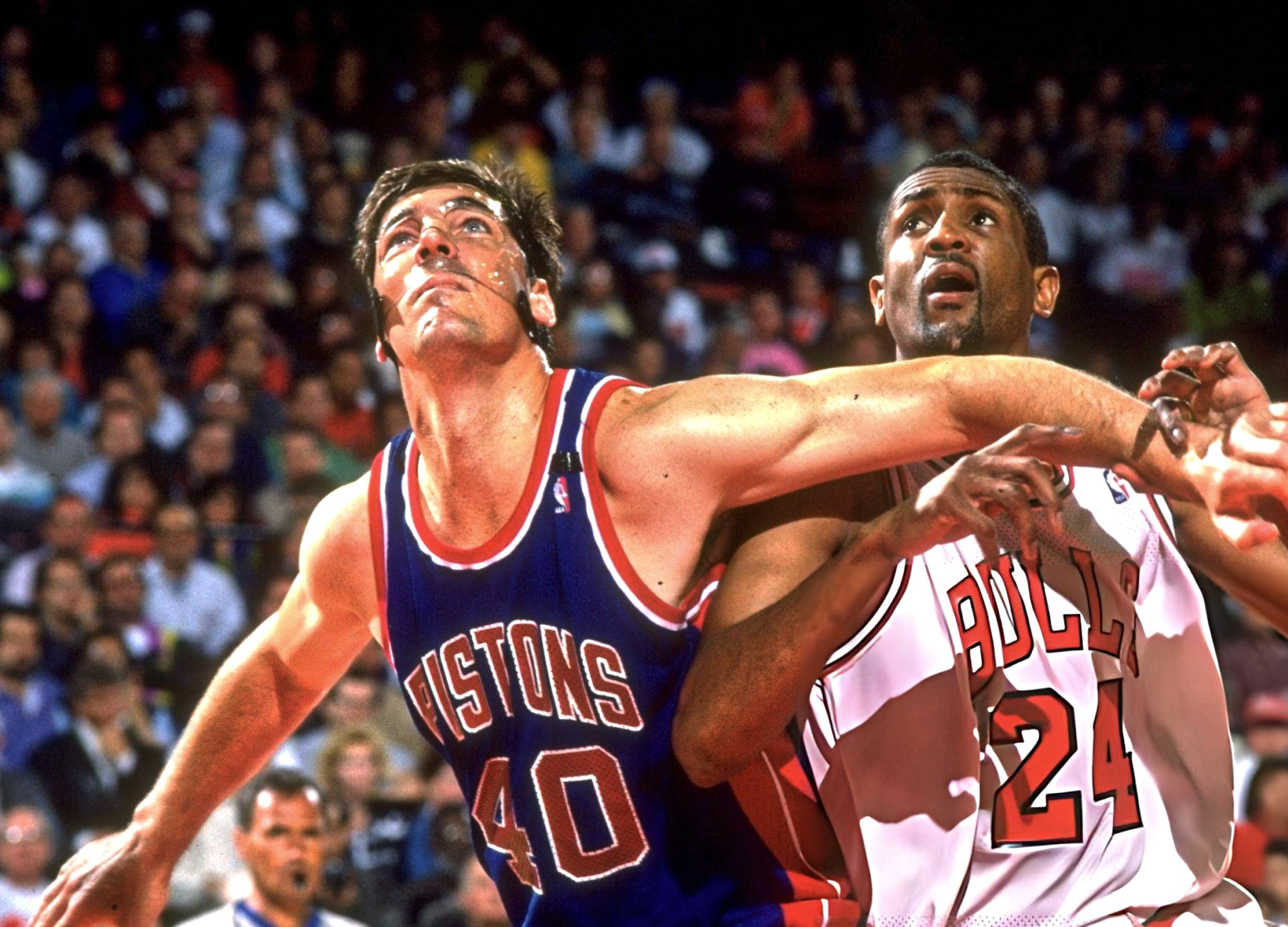
Although Dennis Rodman would go on to become one of the most famous members of the Detroit Pistons, at the time he was just a young player. His days with the Pistons, however, played a crucial role in shaping his distinctive playing style, which set him apart from his colleagues. A great defender on the court, Rodman’s wild unpredictability and eccentric brilliance actually made him a villain in the eyes of many, especially his opponents. In fact, unlike Bill Laimbeer, who used a more direct, physical approach to disrupt his rivals, Rodman often opted for a more subtle strategy to challenge the concentration of his opponents, including a unique intensity, forcing players to contend with his unpredictability. This mental game, combined with an exceptional physical play, became a major element of his success, including his great talent displayed on the court in rebounding and defense. For much of his career, however, Rodman was a polarizing figure: he didn’t conform to the same violent style that defined Laimbeer, so his status as a villain was more rooted on an aura of chaos that seemed to follow him wherever he went. Clashing with referees and league officials, moreover, he made it clear that he had no interest in adhering to traditional expectations. However, despite his controversial behavior, he always respected his team and teammates, showing a strong commitment to playing the game at the highest level. Overall, he used every tool at his disposal, including his unpredictability, to contribute to his team’s success.
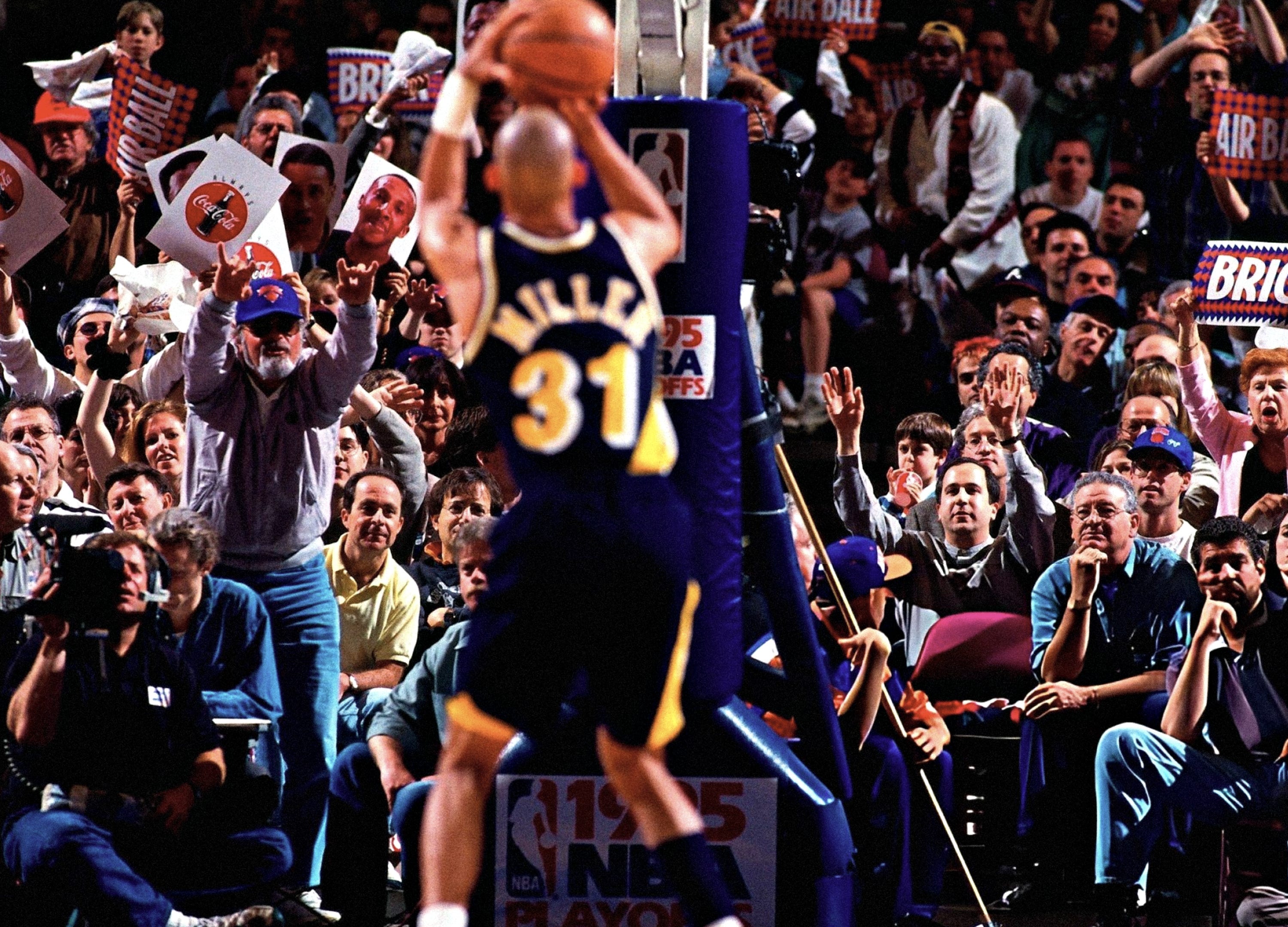
Over the years, Reggie Miller also built a fascinating reputation as a villain in his own right. Miller, in particular, represented a new kind of threat, primarily focused on mental warfare. His infamous “choke” gesture, now legendary in the history of the NBA, is probably the perfect example of his psychological power. Miller’s rivalry with the New York Knicks during the 1994 Eastern Conference Finals became iconic, and in Game 5 on June 1, 1994, he delivered one of the most memorable performances of his career. Scoring twenty-five points in the fourth quarter alone, Miller did a choking celebration in front of the Madison Square Garden crowd, consequently gaining the nickname of Knick Killer. It was devastating for the Knicks and this also included the most famous fan of the Knicks present at the Garden that day, Spike Lee, who eventually got his revenge once the Indiana Pacers lost the series to the New York Knicks. However, Reggie Miller’s gesture and overall attitude became a defining moment in the rivalry, as if part of a psychological strategy. This kind of behavior, however, wasn’t calculated and came as a natural extension of his competitive drive and ability to understand the emotional stakes of the game. Like Laimbeer and Rodman, Miller understood his role in the Knicks/Pacers rivalry and thrived in this hostile atmosphere, embracing the role of the antagonist. His villainous persona on the court was therefore born from his ability to manipulate the emotional intensity of the game, creating psychological pressure on his opponents.
In considering the classic era of the NBA “villains,” the common thread among these players is that their status wasn’t the result of a meticulously crafted strategy, but more like the product of a deeply competitive spirit, intense on-court rivalries and a playing style which adapted to the times. They naturally leaned into physicality, trash talk and mind games, making their presence felt in ways that were impossible to ignore. The key factor to understand is that these players were simply trying to win, and, in doing so, especially when competing against more beloved or appreciated players, they inevitably became antagonists. The perception of their villainy, therefore, was largely based on raw, uncompromising competition, personal attitudes and a rebellious behavior shown on and off the court.
The Transitional Era: Villains Amplified
At the turn of the new millennium, however, the discourse revolving around the figures of the villains in the NBA underwent a significant shift. First and foremost, the relationship between the league and the media evolved dramatically, altering the way players were actually perceived by the public. As media attention intensified and the early days of social media eventually began to take hold, an almost oppressive environment was created, as stories and personalities were magnified and framed in different ways. In this context, players’ actions were deeply observed and scrutinized, often leading to active slander in public discourse. The rise of this media-driven environment created a new type of sports villain, one whose image was largely shaped and amplified by the media itself.
Much like Michael Jordan, Kobe Bryant also embodied the villain archetype during his career, displaying the complexities of a new era in basketball. By the late 1990s and early 2000s, in fact, Bryant had already cemented his status as one of the most dominant players in the league. He owned the court and actually showcased other key aspects besides his undeniable talent, such as his drive for perfection, on-court demeanor, the Mamba Mentality and his successful public persona. To many he was the new hardworking and committed hero with the desire to win at any cost, respected and admired by many. Yet, much like Jordan before him, his persona was met with both admiration and disdain, as this same attitude wasn’t perceived by some as the ideal on-court philosophy. Undeniably, Bryant’s talent and mindset brought him to the peak and made him one of the most recognizable NBA players globally. However, his ability to both inspire and alienate the public opinion was a perfect example of how the media tried to manipulate his narrative. Haunted by controversial events and bearing the weight of being one of the most influential – if not the most influential – players of the new era, Bryant transcended the game itself. He found himself constantly battling the public’s perception, confronting the dual narrative of the modern hero or antihero that both the media and the public had constructed around him.
In a similar vein, LeBron James quickly became one of the most polarizing figures of the 2010s. His position as a legendary player in the modern era was primarily based on dominance and undeniable talent, but the decision to leave Cleveland for Miami in 2010 sparked controversy that remarkably stained his career. To many, this was considered as an act of betrayal. His desire to pursue greatness and win championships with a competitive team was overshadowed by the general understanding and framed by the media as selfishness. Although still glorified by many, LeBron James was heavily vilified. In the context of his spirit of competition and strategic career decisions, his departure from Cleveland became a landmark moment that shifted the NBA’s competitive landscape, an event which represented the evolving nature of the league. It wouldn’t be the first time that such an event occurred in the league. In 2016, another NBA superstar, Kevin Durant, made a similar decision when he left the Oklahoma City Thunder to join the already-victorious Golden State Warriors. This decision set off a wave of criticism and vilification for Durant, whose attitude and controversial events naturally made him the perfect target for media-fueled frenzy.
Therefore, the impact of the media, combined with larger-than-life personas and controversial actions, inevitably shaped the new wave of villains, although the line between villainy and heroism became even more blurred, as the truth behind any story or event is often tainted by the media’s thirst for drama. In this environment, the stories and legacies of players are constantly redefined by on-court accomplishments and the narratives crafted around them.
The Modern Era: The Self-Aware Villain
The concept of the villain was something that the league gradually discovered, finding extraordinary moments where a player would reveal an original side of their personality that contrasted him with the more traditional personalities of their colleagues. However, in the modern era, villainy has evolved into something that players consciously seek or create, becoming more calculated and strategic. In fact, today, many modern players fully embrace their roles as villains, cultivating this mentality through their on-court actions and interactions with the crowd. It’s a new provocative stance, as if it was an attempt to emulate the notorious figures of the past – think of the Bad Boys Pistons, for example – in order to stay relevant in an increasingly crowded and competitive league.
One of the more transitional figures in this context is Draymond Green of the Golden State Warriors, an intentionally provocative player who alternates being a genuine antagonist by nature and playing the role for the sake of the narrative. Green’s talent, rooted in defense, intensity and passion, is accompanied by a violent willingness to push limits on and off the court. He is not scared of trash talk or flagrant fouls, frequently showing his tough character and combative attitude during intense confrontations. Off the court, Green’s behavior, including problematic and unpopular opinions expressed on his podcast, The Draymond Green Show, has only added to his polarizing status. He’s become one of the most divisive figures in the league. However, there are moments where his actions seem more orchestrated, especially when he seems to seek attention or provoke reactions through controversial moments. In this sense, Green stands at the intersection between the transitional era and the modern NBA, characterized by a more strategic approach, leaning into the villain role when it benefits his career.
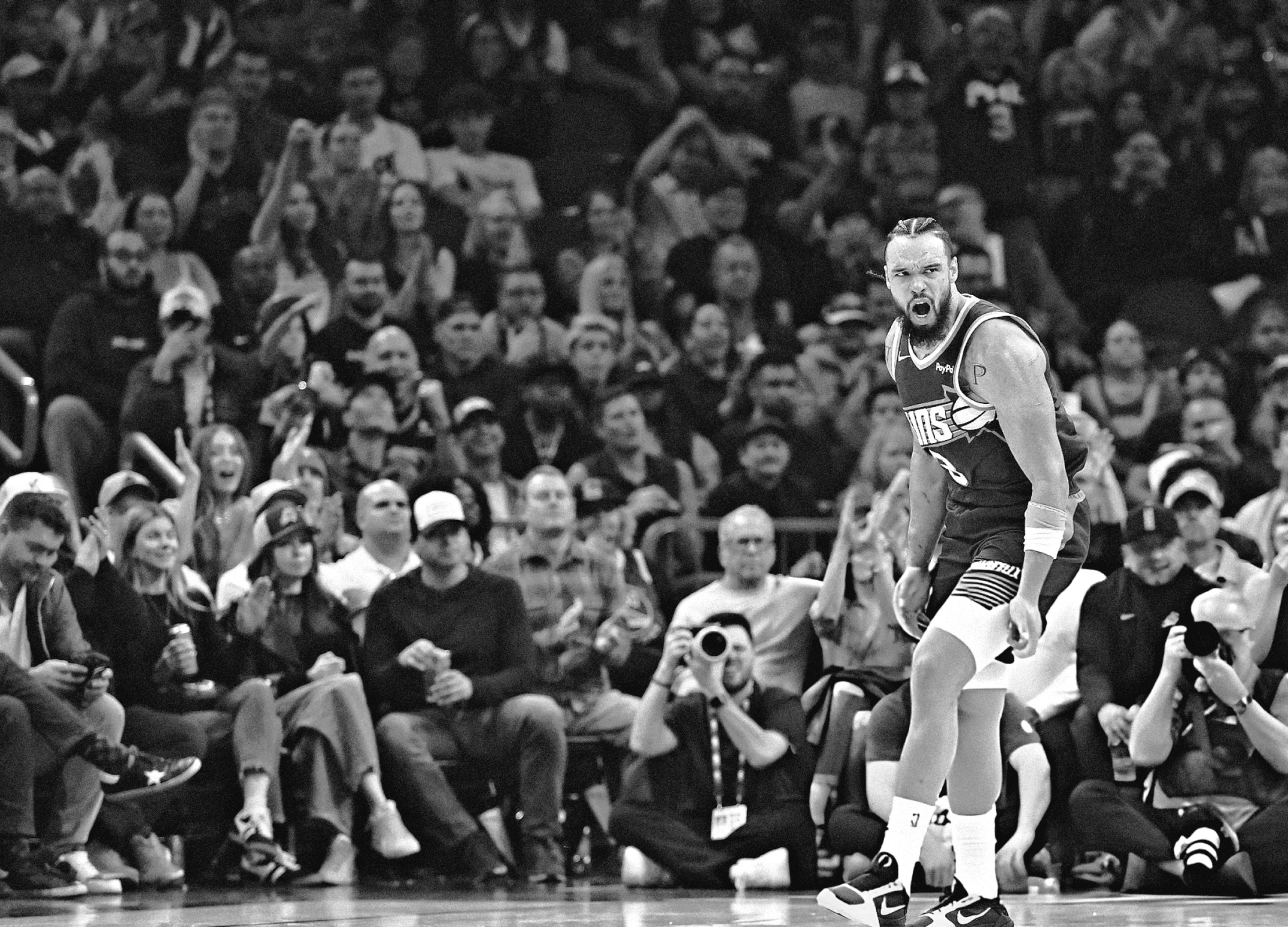
Another key figure in this new era of villains is Dillon Brooks of the Phoenix Suns, who has become a prominent figure in the NBA’s villain discourse. Adopting a confrontational playing style, Brooks has built a reputation as one of the more unpleasant character in the league. He seems to have no real fear of openly expressing his opinions about colleagues and teams, frequently calling out opponents and making snarky comments. However, his attitude often feels exaggerated, especially when his antics appear to be the outcome of a deliberately cultivated role as someone whose presence makes people talk. Brooks has learned to use the hostile atmosphere and public reactions as powerful tools, turning them into weapons that are necessary for his game and his career. Whether the reactions are positive or negative, he keeps the crowd’s attention and rarely fades into the background.
The players mentioned – along with others like Trae Young of the Washington Wizards, whose villainy is more team-specific, particularly aimed at the New York Knicks – all display a great sense of self-awareness. The shift of the league into a media-driven modern narrative has made players more conscious of their roles within the NBA, and many now actively make use of the power of media and social platforms to amplify their personas. Unlike past players, who may have been forced into the villain role by circumstances or constructed narratives, today’s perception of NBA villains is different: the more polarizing the players are, the more they control the narrative and their relevancy. Legacies, now more than ever, are built on different terms and the villain role can be actively controlled, manipulated and exploited for maximum impact.
Sympathy for the Villain
The landscape of the NBA villain has evolved significantly, transitioning from an organic and natural reaction to the league’s raw competition to a more performed villainy driven by personal branding, media strategies and self-awareness. This shift goes beyond simply playing a role in the NBA, highlighting the clear changes the league was subjected to over the decades.
In the past, organic villains accepted their roles – or simply ignored them – because their antagonistic reputations arose naturally. Considering the examples of Kevin Garnett and Bill Laimbeer, they weren’t actively cultivating their villainous images, but it was a bad product of their drive to win at any cost. Competitiveness was highly valued during that era, and on-court physicality and trash talk were just as common as skill and strategy. While their reputations as villains weren’t intentional, they simply played the role with intensity and passion which often led to action that were poorly perceived by the general public, crossing into controversial territory. In a more simplistic view, they just wanted to fight and win, and that desire frequently brought them into confrontation with opponents, referees and even spectators.
This perspective, therefore, highlights how today’s villainy is almost non-existent in comparison to the past. If there is a slight presence of it in the league now, however, then it often feels artificial and calculated, more like a strategy to build a brand through actions and controversies. Players like Dillon Brooks and Draymond Green, for instance, are fully aware that their actions and comments will be observed, shared and judged across all platforms. Their seemingly careless behavior, moreover, adds a fascinating layer to their characters, increasing their visibility and generating constant engagement.
This is why, in a certain sense, Kevin Garnett embodies the archetype of the natural villain, shaped by a strong competitive spirit, motivated by the desire to be successful and unfiltered in his approach. Garnett displayed an obsessiveness that was considered unpleasant by many, but in retrospect, it was also mentally and physically impressive. His actions and words, whether controversial or supportive, were always genuine and came out from a place of authenticity. He didn’t hold back and always tried to get into the heads of his opponents, playing a psychological game without containing his own emotions and his desire to be the best. Garnett stands tall and proud as perhaps the last true villain of the league, though today the concept has shifted into more of an entertainment-driven personality. With a blend of intensity, boldness and passion, Garnett never wavered in his love for the game. After all, being a villain doesn’t diminish the significance of the game for a player. For Garnett, especially, it was all real, a reflection of his true nature.
Despite the shift in the league over the decades, one thing remains fundamental in the discourse: the NBA still needs villains. This concept is intrinsically connected to the idea of controversies, drama and rivalries, and the essence of entertainment in sports implies the presence of an antagonist, someone who challenges the system or the other players. Villains inevitably make the game more engaging, adding layers of complexity to the competition and giving depth to the sport. It is something as old as time itself, explored by philosophers, writers, and present in some of the most iconic works. The realization that the world isn’t divided into simple black-and-white morality, combined with the pragmatism of literary or cinematic villains, makes the comparison to real-life scenarios, like the NBA, even more interesting. For instance, Shakespeare’s villains are often remembered more vividly than the virtuous characters in his works, not because in a simplistic way everyone likes a villain, but because they are realistic, remarkable and serve as a mirror to our modern society. They manipulate narratives, display complex emotions, conceal secrets and betrayals, and, at the same time, they feel, they are human. They are like us. This is why perhaps NBA villains are so fascinating and spectators need them as much as they need a game-changing dunk moment. They inevitably add a vital, dramatic element to the game, keeping the story of the season unpredictable and exciting.
While the dynamics of villainy in the league have undoubtedly changed with the rise of social media and personal branding, the need for villains remains as strong as ever. Whether an organic or performed aspect, the NBA will always need players who embrace these roles because without them the game would lose a vital part of its entertaining nature. This is why the absence of a true villain – especially the memorable ones, the beautiful ones, like Garnett or Laimbeer – is always felt. The silence they leave behind is as loud as the chaos they once created on the court.
Irene this was great!! I definitely think villains are needed in sports, they give us something to root against (and underdogs to root for, indirectly).
It definitely extends to teams too. No dynasty has ever passed by without it's fair share of haters, and that's the fun of it. It's why we remember their adversaries so fondly - the '19 Raptors, '04 Pistons, etc.
I wonder when the next villain of the league will pop-up. I feel like we don't have any large scale ones right now. Embiid seemed on that trajectory, but ever since his injuries piled up, he's more of a grey area for fans now, I think.
Fantastic read Irene.
The psychology behind Garnett embracing the villain role I’d say goes back to his rookie year when the Timberwolves played the Lakers.
There was a play where Cedric Ceballos blew by him and dunked, ran back and said “not ready”.
That moment definitely ignited a fire to prove critics wrong because as you would remember when Garnett declared for the 1995 NBA drag straight out of Farragut Academy, many pieces written doubted whether he was ready for the extra level of physicality.